Nourish with care.
Choose ingredients thoughtfully. Make time for satisfying food and a welcoming table.
Food, wellness & the world around us
Homemade food. Thoughtfully chosen ingredients. Small ways to care for the earth.
A warm breakfast, something growing in the garden, a meal shared without rushing. These everyday moments help us make children’s days feel special.
One shared philosophy for Preschool, Kids Club, and Summer Club.
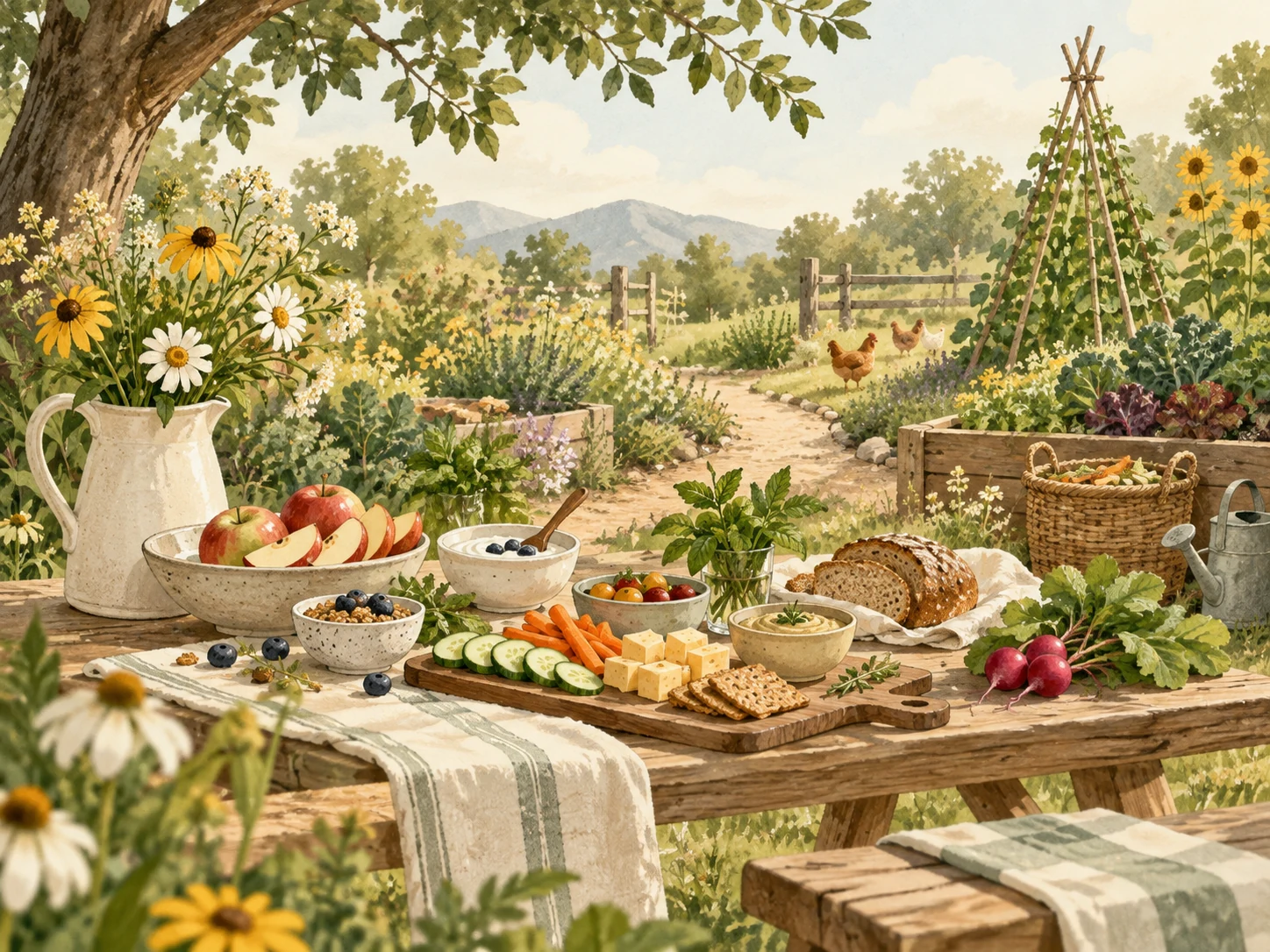
Illustrations express our food and garden philosophy; they are not photographs of the property or a daily menu.
Choose ingredients thoughtfully. Make time for satisfying food and a welcoming table.
Stir, plant, water, notice. Small contributions help children feel connected to what they eat.
Use what we need with gratitude, reduce waste, and care for the soil that grows our food.
The ingredients matter
We read the label, not just the promise on the front. The same standards guide what we make and what we buy.
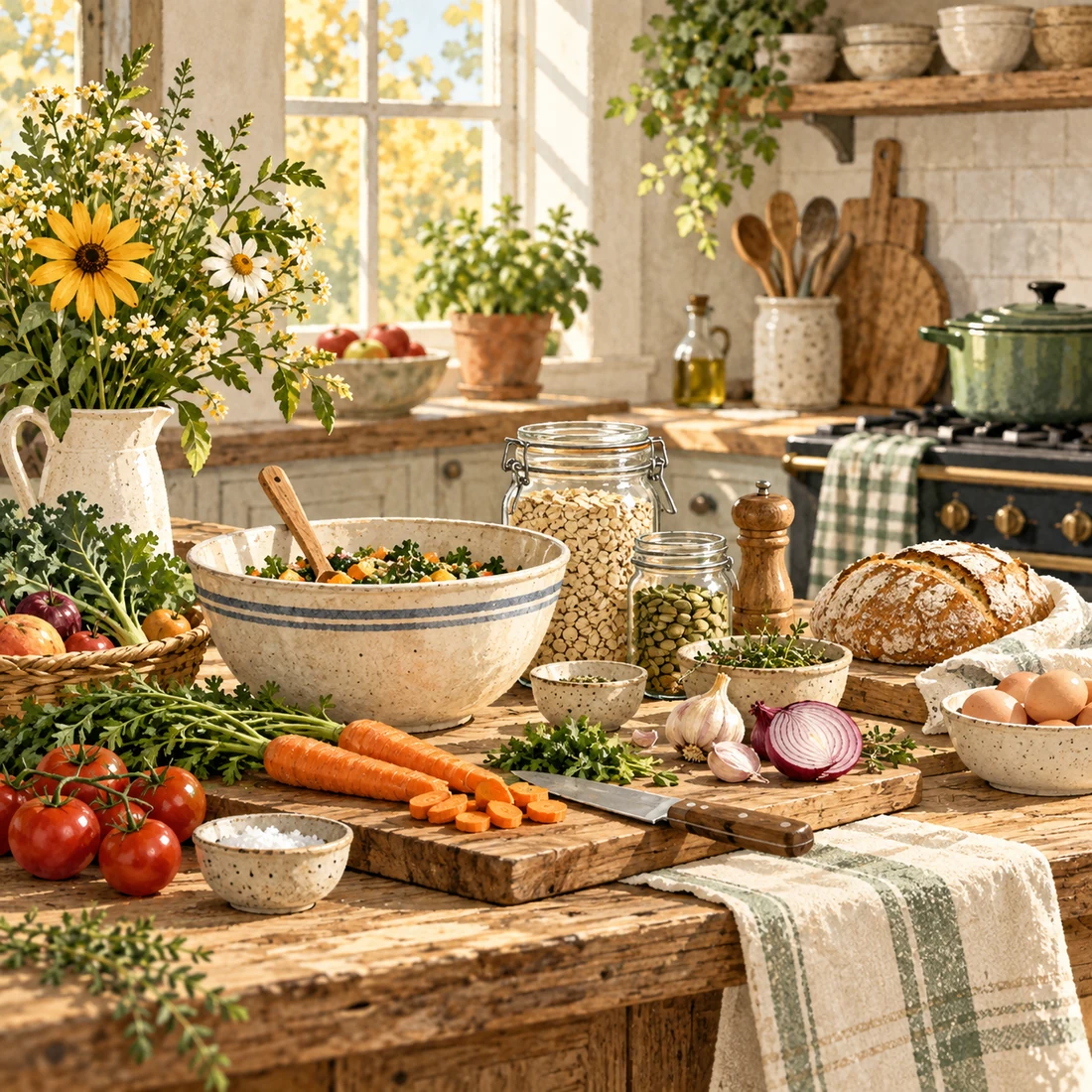
We leave out enriched flour and grain products, including breads, pasta, and cereals made with them. We choose whole grains and unenriched alternatives.
Why we choose this Enriched flour is refined grain with vitamins added back, including synthetic folic acid. Folate metabolism is not identical in everyone: a meta-analysis found that people with the common MTHFR 677TT genotype had lower folate status and a smaller short-term serum-folate response to folic acid supplementation. Reviews also document that unmetabolized folic acid can appear in circulation after fortified foods or supplements, while its long-term health significance is still being studied. We prefer whole or unenriched grains as a simple, consistent food standard.[1, 6–7]
Our ingredient standard includes non-GMO grains and other ingredients. Organic and non-GMO labeling, ingredient lists, and supplier information guide our purchases.
Why we choose this It gives families who prefer ingredients made without genetic engineering a clear, consistent sourcing standard.
We leave seed oils out of our cooking and check purchased foods, too. We use olive oil, avocado oil, butter, or coconut oil, with each child’s dietary needs in mind.
Why we choose this We like knowing exactly which fats go into a recipe and choosing them deliberately for the food we’re making.
Fruit, vegetables, herbs, and simple recipes bring their own color and flavor. We check snacks and pantry ingredients for artificial colors and flavors.
Why we choose this Children can get to know the tastes, colors, and textures of the ingredients themselves.
These are our food choices—not a judgment of another family’s table or a treatment for a medical condition.
Well fed, through the day
Food should fit the hours your child is with us. Choose a program to see how meals and snacks fit the day.
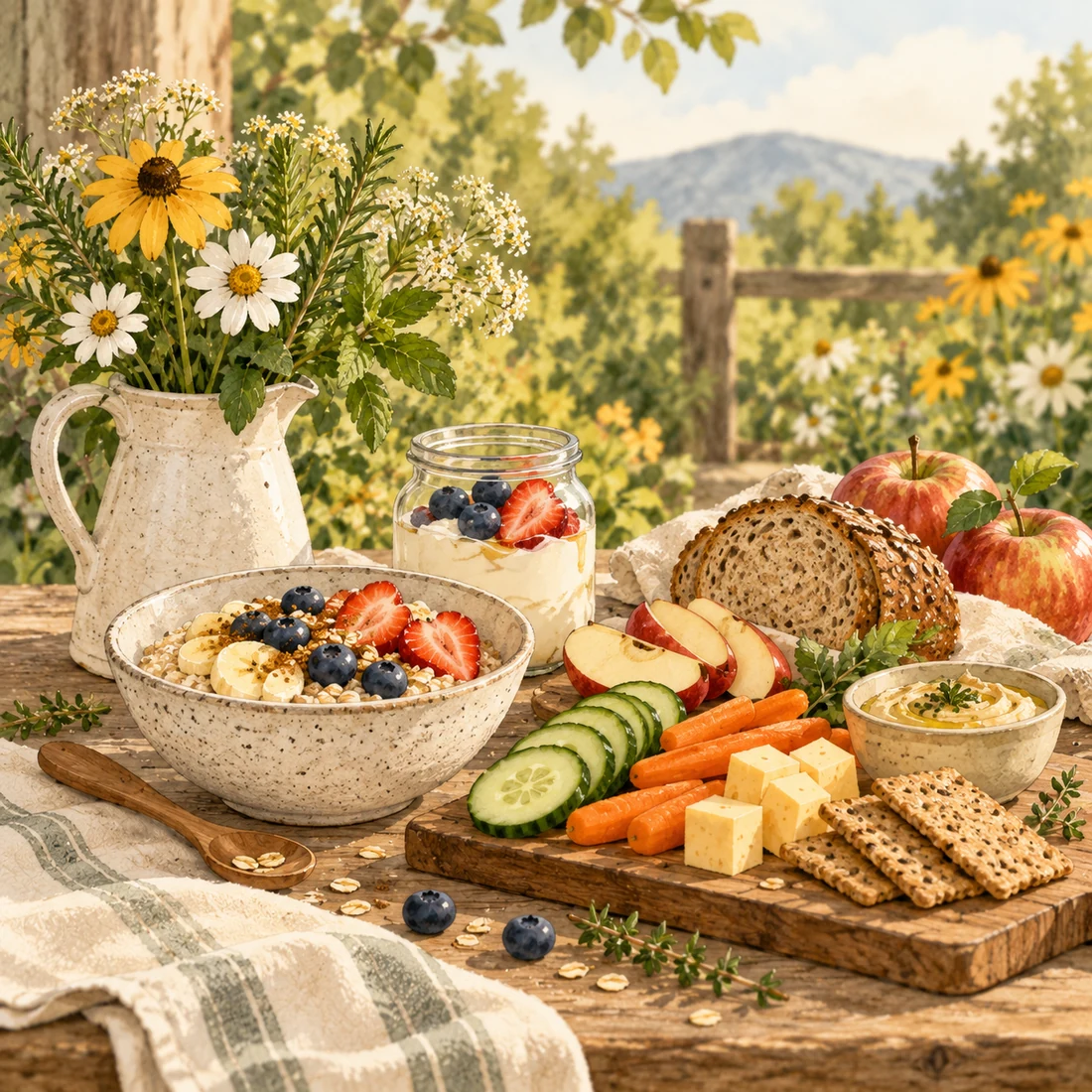
Examples are meal ideas, not a complete daily menu. Portions, ingredients, and substitutions are chosen for children’s ages, nutrition needs, and agreed allergy plans. We share meal times before care begins so families can plan around breakfast and lunch.
Made with care. Chosen with intention.
We make breads, meals, and snacks from simple ingredients. Homemade food gives us a direct say in what goes into the recipe. Purchased ingredients and foods follow the same standards.
We choose organic as much as possible. Organic farming standards emphasize soil care, resource cycles, and biodiversity—values we want children to see in everyday life.[2]
Herbs, peas, and seasonal harvests connect the garden to our food plans. Children can notice what is growing and help harvest appropriate produce with an adult.
We seek out local produce and source meat from local farmers when available through inspected, approved suppliers. We value knowing the people and places behind our ingredients.
Not every item is organic, local, or homemade. Our ingredient standards stay consistent, and we welcome questions about a specific food or supplier.
A principle we practice
The garden is more than a place to pick a snack. It is a chance to see that food belongs to a living cycle—and that we have a part in caring for it.
We teach children to use what they need thoughtfully, give plants time to grow, and return suitable scraps to the soil. A seed, a small harvest, or a flower they helped plant can make that connection real.
Take thoughtfully.
Give back.
Help things grow.
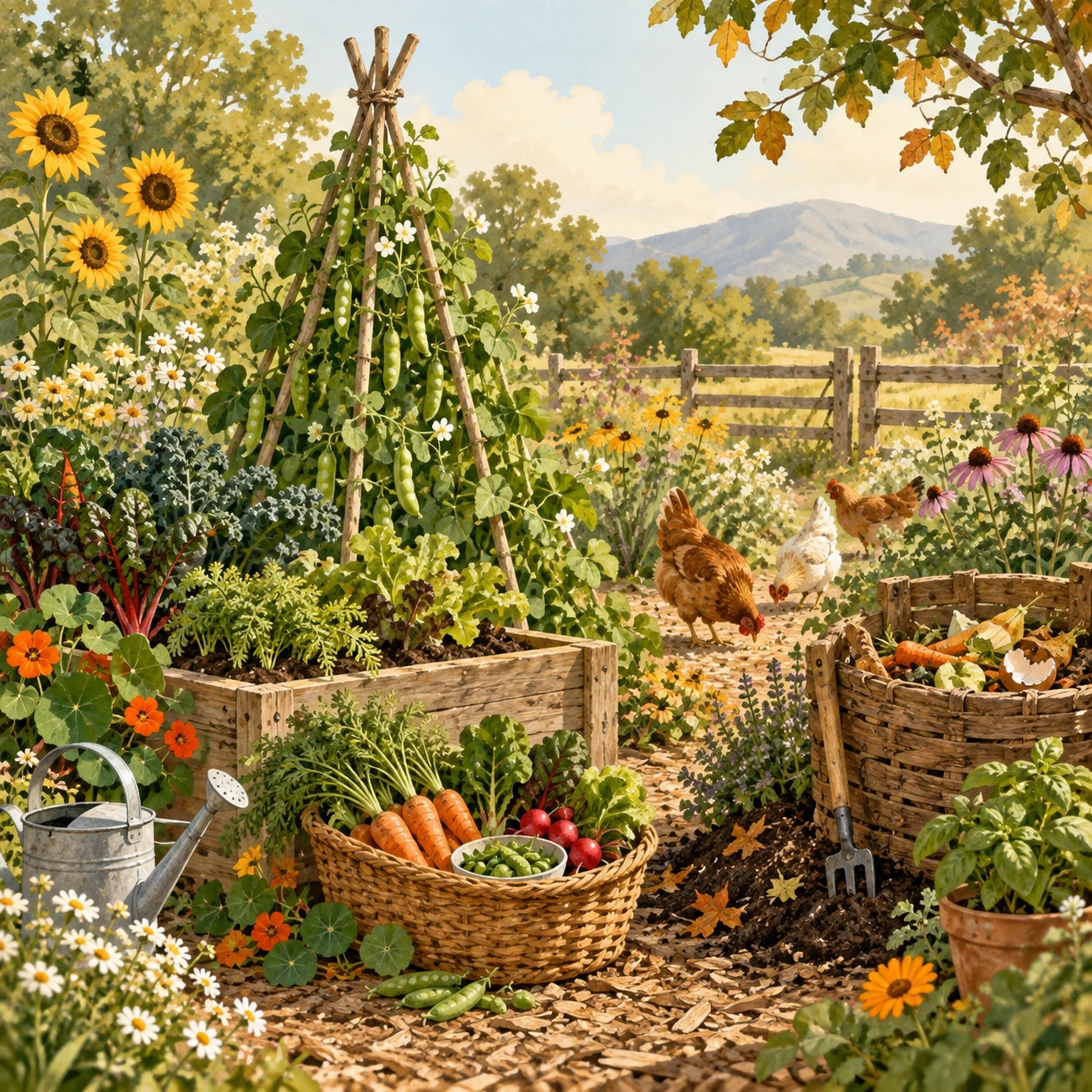
Sow peas, flowers, herbs, or a little patch of vegetables.
Water thoughtfully, notice growth, and care for living things.
Pick with an adult, wash the harvest, and connect it to the table.
Sort suitable scraps for compost; finished compost nourishes the next planting.[3]
And the next growing cycle begins.
We offer manageable portions and more when children are hungry. Uneaten food is not a reason to insist on a clean plate. Adults help sort suitable fruit and vegetable scraps for compost; not every leftover belongs there.
Adults manage the chickens and may offer suitable food scraps as part of their feeding plan. Children observe only from outside the separate enclosure, where permitted. Young children do not handle poultry or their equipment.
Whether watching an insect or a horse beyond a fence, we practice gentle observation. We leave animals their space, care for flowers, and learn that the outdoors is shared.
Adults handle compost management, poultry care, and cleaning. Chicken areas, equipment, and unfinished compost stay away from children’s eating and play areas. We wash hands after outdoor activities and before preparing or eating food.
Garden and animal activities must fit the children’s ages and the applicable health and site requirements. Poultry are not part of the preschool play space; CDC guidance advises against keeping live poultry in childcare facilities serving children under five. We confirm appropriate property arrangements before offering animal-related activities.[4]
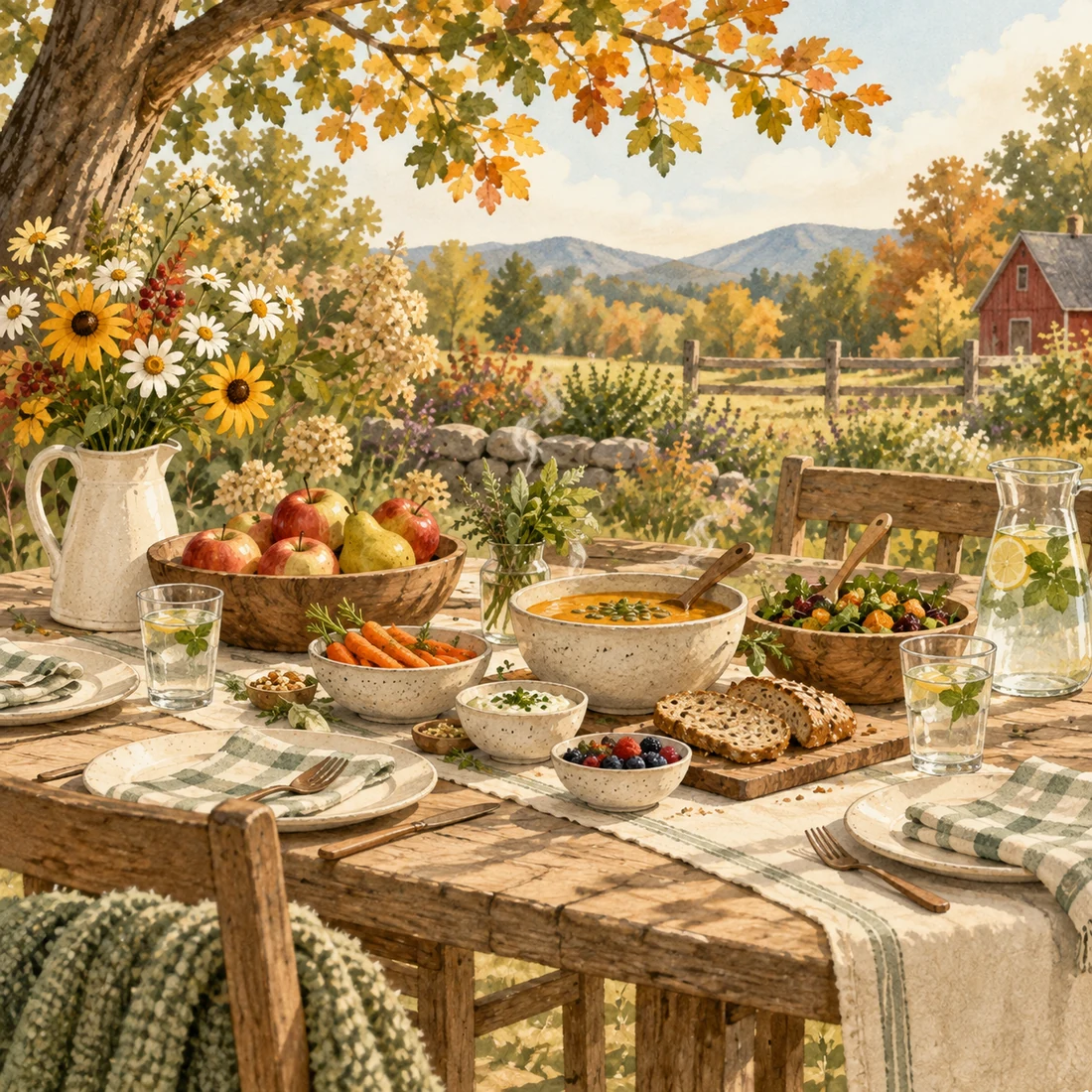
A place at the table
Meals are a chance to sit together, share a conversation, and enjoy food. Children receive gentle encouragement to explore—not forced bites, clean-plate demands, or rewards for eating.
We make room for conversation and let children respond to hunger and fullness.
Wash produce, stir, set a place, or help assemble a snack—with an adult and a task that fits the child.
We discuss allergies, sensitivities, and dietary plans before care begins. We do not promise an allergen-free kitchen.
The same care continues beyond food
Our food standards come from a broader principle: choose everyday inputs with intention and leave out what does not need to be there. That same approach carries into the care space—from fresh air and no added room fragrance to thoughtful cleaning and simple, durable materials.
In the care space
Here, wellness means more than what children eat. It also means fresh air, room to pause, and everyday products chosen with the same care we bring to the kitchen.
A closer look
Ask us about an ingredient, a routine, or something important to your family. You do not have to guess what we mean.
Reach out to usSummer Club includes breakfast, lunch, and a hearty afternoon snack, with water throughout the day and additional food as needed. Before-school Kids Club includes breakfast; after-school care includes a hearty snack. Preschool and Pre-K include a class snack, not a replacement for breakfast or lunch.
We prefer grains without an added enrichment blend, while including whole grains and a variety of foods. “Enriched” means certain vitamins and minerals have been added; it does not mean a food is automatically hard to digest. Unenriched is not the same as whole-grain, gluten-free, or more nutritious.
Our preference does not mean children should avoid vitamins or minerals. For questions about folate, supplements, or an individual dietary need, follow your child’s healthcare professional’s guidance.[6]
Canola, soybean, corn, sunflower, safflower, cottonseed, grapeseed, and rice bran oil. We check purchased breads, crackers, dressings, and spreads as well as our recipes.
Olive oil, avocado oil, butter, and coconut oil are among our alternatives. We choose the fat to suit the recipe and check ingredients against each child’s agreed dietary needs.
Organic is our first choice, homemade food is part of our routine, and seasonal garden harvests and local suppliers matter to us. Some foods and pantry staples are purchased, and not everything is organic or local. We can share ingredient and sourcing information for a specific meal.
No. We do not use microwaves to prepare or reheat children’s food. We use other suitable cooking methods and follow safe heating, cooling, and storage practices.
We discuss your child’s needs before enrollment and review any written allergy or medical plan with the adults providing care. We consider substitutions and cross-contact precautions individually; our kitchen is not allergen-free.
We use appropriate food sources, pasteurized dairy, safe storage and cooking, and handwashing. Local and homegrown foods still need to meet the requirements for the program. Food is cut and served in age-appropriate ways.
Children can help identify suitable plant scraps for compost with an adult. Adults manage the compost and decide which scraps, if any, are appropriate for the chickens. Not all leftovers are suitable for either.
Young children do not handle poultry or poultry equipment. Any animal-related observation depends on age, health guidance, and approved property arrangements. Read about the garden cycle and boundaries →
Tell us what affects your child so we can review the products used in their care. We do not add room fragrance and choose fragrance-free everyday products. We cannot guarantee that no scent will ever enter a shared space on clothing or personal belongings.
There is room for your questions
Reach out to us about ingredients, everyday products, or how we can plan for your child. For personal medical details, we’ll arrange a private conversation.